


Does Couples Therapy Work? Relationship Counselling Explained

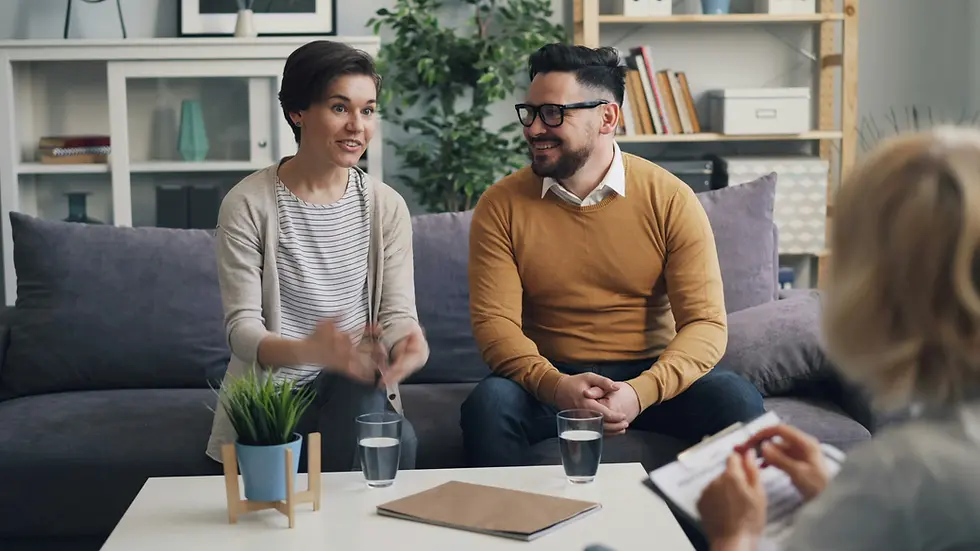
Does couples therapy work? For most couples, the answer is yes, as a meta-analysis on couples therapy found a large effect size of 1.31 on relationship satisfaction, with 70% to 73% of couples recovering from distress and 90% showing significant improvement compared to couples who received no treatment.
At Relationship Matters Therapy Centre, we believe "working" looks different for every couple, and how well it holds up depends on trust, engagement, and the type of concerns being addressed. Here is what research actually says, what it does not say, and how to know if couples therapy could help you.
Does Couples Therapy Work? Key Takeaways
Research suggests couples therapy can make a meaningful difference, but outcomes vary from couple to couple. Here are the main takeaways:
Couples therapy can improve relationship satisfaction. Research consistently finds meaningful improvements compared with receiving no treatment.
Most couples improve, but not everyone does. Therapy can reduce distress and improve communication, connection, and trust, but some couples see limited progress.
Improvement does not always mean staying together. Therapy can help couples change unhealthy patterns and make clearer decisions about their relationship, whether they remain together or not.
Changes can last beyond therapy. Follow-up studies suggest that improvements can be maintained, and sometimes continue developing, after treatment ends.
Engagement matters. Trust between partners, willingness to participate, and a strong relationship with the therapist can all influence outcomes.
The right approach depends on the problem. Approaches such as Emotionally Focused Therapy, the Gottman Method, and Cognitive Behavioral Couple Therapy can address different relationship concerns.
What Does It Actually Mean for Therapy to 'Work'?
This is where the research gets more complicated. A couple might say therapy "worked" because they argue less, feel closer, understand each other better, or one partner's anxiety has eased. None of that is the same as staying together.
In a University of Ottawa study, 15 of 24 couples, or 62.5%, were considered resolved after an average of 13 sessions. The remaining 9 couples, or 37.5%, were not resolved, yet some of those couples still chose to stay together while they kept working on the relationship.
Does marriage counselling work the same way? Marriage counselling and couples therapy measure success the same way. The real question is not whether you stay together. It is whether the pattern between you actually changed.
Post-Couples Therapy: Does It Create Lasting Changes or Temporary Relief?

Gains from couples therapy can hold up well past the final session. A study following couples for two years after emotionally focused couple therapy tracked 32 couples who received an average of 21 sessions, and found that relationship satisfaction and secure attachment behaviour kept increasing across the full 24-month follow-up rather than fading.
A related three-year follow-up on resolving attachment injuries found that improvements in dyadic adjustment, trust, and forgiveness were maintained across the full 3 years for the couples studied.
What Makes Couples Therapy Create Lasting Changes?
What tends to separate lasting change from temporary relief is the same thing that predicts success in the first place, trust and engagement between partners. This is part of why the cycle behind repeated conflict matters more than any single breakthrough moment in session.
What Kinds of Relationship Problems Does Couples Therapy Work Best For?
Couples therapy tends to work best for problems rooted in a pattern, not a single event, like the pursue-withdraw pattern. The study on resolving attachment injuries using EFT found this approach specifically effective for betrayals and abandonment during a time of need, resolving 62.5% of cases. Therapy can also help when partners are simply reacting to the same conflict cycle over and over without realizing it.
Problems That Are Harder to Treat
The remaining 37.5% of couples in the same study did not reach resolution, and the predictors-of-success study points to why: therapy is harder when partners have little trust going in, or when the working relationship with the therapist doesn't take hold. It also tends to be harder when one partner is actively disengaged or when there is an ongoing affair or addiction pulling attention elsewhere.
Why Does Couples Therapy Fail?

Couples therapy does not work for every couple, and research points to specific, identifiable reasons rather than bad luck. The predictors of success run in both directions, so the same factors that build trust and connection are the ones missing when therapy falls short:
Low trust going in: A partner's trust in the other's caring was one of the strongest predictors of a good outcome, so couples with little trust at the start tend to see limited gains.
A weak therapeutic alliance: The working relationship with the therapist, not just the technique used, predicted whether couples improved.
Unresolved attachment injuries: 37.5% of couples did not resolve a significant betrayal or abandonment even after a full course of therapy.
Ongoing mutual blame: Partners who spend sessions defending themselves instead of examining the shared pattern make it harder for trust to rebuild.
No practice between sessions: Skills discussed in the room only help if couples keep using them at home, which is consistent with why trust and engagement, not the single session itself, predicted results in the research above.
Recognizing these patterns early rather than waiting for a breaking point tends to make the biggest difference in outcome.
How Relationship Matters Therapy Centre Helps Couples Move Forward

Relationship Matters Therapy Centre is recognized as a marriage or relationship counselor in Cambridge, Kitchener, Waterloo, and clients across Ontario through online counselling. Wherever you are in your relationship, couples therapy in Cambridge with Relationship Matters Therapy Centre is built around the pattern between you, not who is right. Our clinicians are trained in Emotionally Focused Therapy, alongside the Gottman Method.
Sessions run a full 60 minutes, longer than the industry standard, giving you and your partner more room to work through what is actually going on. If cost has kept you from reaching out, our affordable therapy option offers the same quality of care with a free 60-minute matching session first. If you are ready to talk with someone, book a free consultation to get started.
Does Relationship Therapy Work? FAQs
Will couples counseling work?
For most couples who complete it, yes. Research shows 70% to 73% recover from distress, with 90% rating themselves better off than untreated couples.
What are the different types of couples therapy?
Common approaches include Emotionally Focused Therapy (EFT), the Gottman Method, and Integrative Behavioural Couples Therapy (BCT). Each focuses on the pattern between partners.
Can marriage counseling work?
Yes, in the same way couples therapy does. Both address the relationship pattern itself, not the legal status of the couple.
What is the 5-5-5 rule for couples therapy?
It is a communication exercise some couples use at home: 5 minutes each partner speaks uninterrupted, then 5 minutes on solutions. It is not a clinical model.
How long do most couples stay in couples therapy?
This varies by couple and by concern. In research on attachment injuries, couples received an average of 13 to 21 sessions depending on the study.
Is it normal to be nervous before couples therapy?
Yes. A first session works both ways, helping you and the therapist figure out together whether the fit feels right.
Disclaimer: This article is for general informational purposes only and is not a substitute for therapy or mental health care. If you are in immediate danger or experiencing a mental health crisis, call 911, go to your nearest emergency department, or contact 988, Canada's Suicide Crisis Helpline.


